
UK Housebuilding Sector Shows Strong Confidence Amid Regulatory and Cost Pressures
Four in five UK businesses operating across housebuilding and its supply chains remain confident about the year ahead, despite ongoing affordability concerns, regulatory changes and financial caution.
That is according to the latest Barclays Business Prosperity Index, which draws on anonymised data from around 70,000 UK firms alongside surveys of 500 industry leaders and 2,000 consumers.
The findings point to strengthening activity at the early stages of development, sustained demand for new-build homes and a significant uplift in planned investment.
Early Pipeline Activity Strengthens
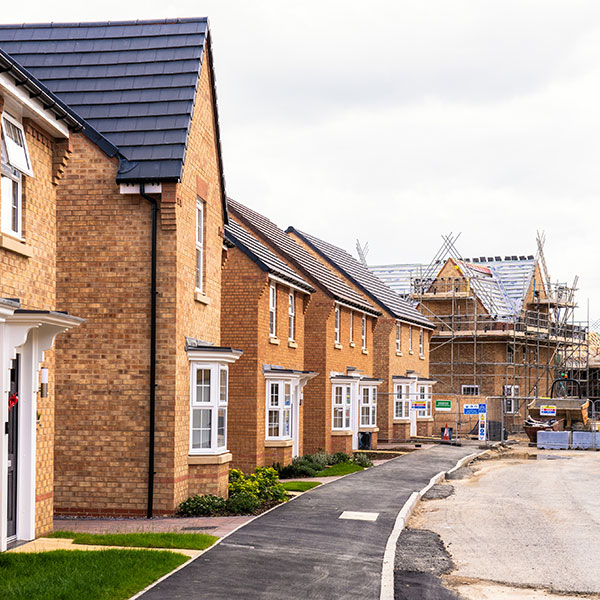
Incoming cashflows for architects and quantity surveyors have risen over the past year, suggesting renewed momentum at the front end of the development process.
- Architects recorded a 2.3 per cent increase in incoming cashflows between Q3 2024 and Q3 2025.
- Quantity surveyors saw a 4.8 per cent rise over the same period.
These gains are seen as indicators of growing activity in design, planning and cost management stages, often the first signals of increased building output.
Financial behaviour across the sector varies by size. Smaller firms have reduced borrowing by 17.7 per cent and increased savings by 3.0 per cent, suggesting a cautious approach.
In contrast, a smaller group of larger firms have increased borrowing by 20.0 per cent and drawn down savings by 8.9 per cent, potentially signalling expansion and capital deployment.
Investment and Innovation Accelerate
Business leaders expect total investment to rise by around 38 per cent over the next 12 months. Planned spending includes:
- Marketing – 42 per cent
- New equipment – 39 per cent
- Pay and talent attraction – 37 per cent
Skills shortages remain a challenge. Among firms reporting gaps in capability:
- 40 per cent are investing in new construction methods to reduce reliance on manual labour
- 39 per cent are developing early-career schemes
- 36 per cent are focusing on training and upskilling
Artificial intelligence and digital tools are also becoming more prominent. The average intended AI investment stands at £441,281, with funds directed towards:
- AI-assisted design and planning – 37 per cent
- Renewable and energy-efficient materials – 36 per cent
- Business management automation software – 35 per cent
- Building Information Modelling – 29 per cent
Spending varies by trade. Electronics firms report planned AI investment exceeding £500,000, while plumbing, carpentry and painting and decorating firms indicate lower but still notable allocations.
Future Homes Standard: Priority and Pressure
Almost all firms surveyed, 98 per cent, say alignment with the Government’s Future Homes Standard is a priority in the next year. However, 82 per cent express concern about their readiness.
The main areas where support is needed include:
- Installing low-carbon heating systems – 21 per cent
- Applying the new Home Energy Model – 20 per cent
- Meeting updated ventilation standards – 18 per cent
Despite concerns, 30 per cent of businesses are already investing in specialist equipment, training and technology to improve compliance.
Strong Demand from Younger Buyers
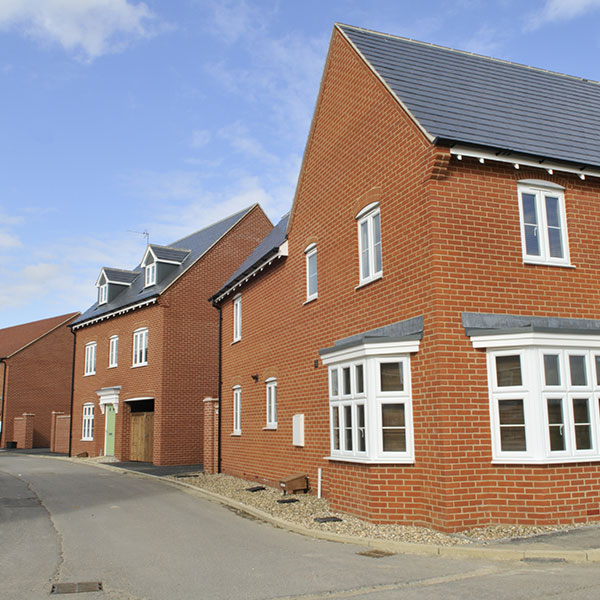
New-build homes continue to attract younger buyers in particular.
- 25 per cent of all homeowners report living in a new-build property
- 47 per cent of first-time buyers in the past year chose a new-build
- 61 per cent of Gen Z homeowners live in a new-build home
Among Gen Z buyers, location is the leading driver at 28 per cent. A further 20 per cent cite favourable mortgage terms, including higher loan-to-value ratios, while 17 per cent highlight energy efficiency.
However, affordability pressures remain. Of those in Gen Z hoping to buy in the next 12 months, 61 per cent say mortgage rates have a greater impact on affordability than house prices themselves.
Barriers to Building Remain
Despite resilient demand, developers report ongoing challenges.
- 25 per cent cite high construction costs as a major barrier
- 19 per cent reference rising inflation
- 19 per cent point to raw material costs
- 19 per cent highlight the requirements of the Future Homes Standard
Looking ahead, developers expect growing demand for customisation options, such as layouts and finishes, with 31 per cent saying this will most influence their approach.
Upgraded digital infrastructure, including high-speed broadband, follows at 27 per cent.
Consumers, however, prioritise different factors. When asked what most influences their choice of property:
- 42 per cent cite access to gardens or communal green space
- 31 per cent prioritise proximity to transport hubs
- 30 per cent value access to parks or countryside
- 17 per cent mention digital infrastructure
- 11 per cent cite customisation
The latest data suggests cautious optimism across the UK housebuilding sector.
Early-stage pipeline activity is strengthening, investment intentions are rising and younger buyers continue to show strong demand for new-build homes.